
We are experiencing a shift from purely emotional entertainment to more purpose driven Infotainment
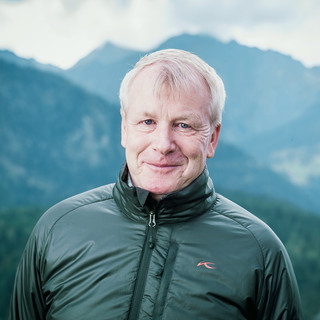
Interview im SPONSORINGextra März 2026

“How is life” as an agency in the Swiss Sponsorship and events market? Is it still enjoyable in times like these?
Christof Marti: Yes—absolutely. Otherwise, I would stop immediately. It’s exciting and, at the same time, highly challenging. Everything is changing at an incredible pace—especially due to digital development. You have to stay alert and, above all, curious. And I’m still very curious. I find it extremely compelling to search for—and find—solutions, especially when at the beginning I have no idea how something could possibly work. When I do find a solution, I’m highly motivated to bring it into the world of a company, an organizer, or a specific project. What appeals to me most is the unconventional. In our industry, there are already enough players who only commit to what they know and where they feel safe—at the risk of producing nothing more than mediocrity. Mediocrity is the last thing I want to deliver.
So how do you position your agency?
Christof Marti: Based on my professional background, I’m broadly and diversely positioned—able to view situations from multiple angles and with all relevant players in the Sponsorship and events market. My focus is on conceptual work and, if desired, on supporting implementation. Often, I advise both the sponsor and the sponsored party at the same time. That allows me to coordinate optimally—fully transparent and neutral. It also helps prevent partners from pushing responsibilities onto each other that, realistically, can’t be implemented. Through my many years as Head of Sponsorship at a major Swiss bank, managing national and international large-scale Sponsorship projects, I learned the sponsor side in all its facets. At the same time, I came to understand the needs and capabilities of organizers and everyone involved—directly and indirectly. Since 2011, I’ve been self-employed with my boutique agency, born out of my passion for working with selected brands, athletes, and projects—across sports, culture, society and science, social causes, and lifestyle.
The Sponsorship and events market is changing very dynamically for everyone involved. What do you see as an agency’s role today—and which agencies will struggle in the future?
Christof Marti: Fundamentally, there are two types of agencies. Some focus primarily on selling offerings such as Sponsorship and hospitality packages. Pure sales agencies are already struggling today—and it will likely become even harder. As a result, I expect a certain market consolidation. It really depends on how well an agency is established in the market and on the attractiveness of its offerings. The other type focuses on consulting—ideally holistic and grounded in real experience. Anyone who relies solely on strategy consulting will already find it difficult today—and even more so in the future. A consulting agency must continuously reinvent itself, because topics and responsibilities are changing extremely fast. Events such as financial crises, political and societal shifts, and economic turbulence have always existed, but their speed and frequency continue to increase significantly. Technological progress is also rapid. On the topic of how AI is influencing—or will influence—our industry, there are now new self-proclaimed experts almost every day who want to explain the world to us. Everything is becoming more complex and increasingly interconnected. Marketing departments often need to respond within very short timeframes. Under pressure, they are more likely to cut budgets in Sponsorship than reduce product advertising. That means greater flexibility is required in Sponsorship—especially regarding the duration of a partnership. This makes long-term planning more difficult, which in turn becomes a challenge for organizers or mandated agencies when Sponsorship contracts are only concluded year by year. In the past, sponsors often sought long-term partnerships and liked to emphasize that. During the COVID period, this saved many associations and clubs in Swiss sports. Today, anyone who can still conclude multi-year Sponsorship contracts with companies is fortunate.
Are agencies also more challenged creatively?
Christof Marti: Absolutely—specifically in conceptual creativity. The creative component has shifted. In the past, sponsors entered a promising partnership and then developed a strong, creative activation concept after signing the contract. Today, agencies or rights holders are expected to start much earlier in the concept phase and present solutions. Before the ink on the sponsor contract is even dry, many companies want to know exactly how they can implement and activate their needs. So agencies are not only more challenged creatively, but also in terms of effort and the flexibility mentioned.
Your website doesn’t list reference projects, which is unusual for agencies. Why? Don’t you have projects?
Christof Marti: I do—but I’ve never listed projects on my agency website and I won’t in the future. When I was on the sponsor side and responsible, among other things, for the Alinghi project, I was always amazed at how many people claimed to have worked on it—and then used it as a great reference. Later, I experienced this often when potential agency employees introduced themselves. I tried to ensure that these storytellers could still save face after a relatively short conversation, so they could make a respectable exit.
Still—what projects are you currently working on?
Christof Marti: My assignments often take place “undercover,” such as last year with two major projects that may take place in the future. There are several of those in Switzerland. This also includes an investment project in which partnerships are expected to play a certain role. I can’t say more at the moment. One highly exciting project I’m currently involved with is the Cybathlon, initiated by ETH Zurich.
What is the Cybathlon about?
Christof Marti: The Cybathlon is a competition in which people with physical disabilities solve everyday tasks using state-of-the-art assistive technologies—demonstrating and advancing their real-world usability. With its future new foundation structure, the Cybathlon offers a unique platform to drive research and development in practical assistive technologies and to foster public dialogue about inclusion in everyday life. The goal is to challenge developer teams worldwide to build aids that truly work in daily life—not just in the lab. The Cybathlon aims to accelerate innovation in assistive technology and, on the one hand, promote inclusion as it has done so far; on the other hand, it shows how assistive technology—such as exoskeletons—can improve quality of life and mobility for people in vulnerable life situations. A soft exoskeleton is a wearable mechanical framework attached to the human body that supports or amplifies movement—similar to how an e-bike supports you compared to a bike without technical assistance. At the same time, the Cybathlon makes visible to a broad public the barriers people face in everyday life and how technology can help overcome them. My role at the Cybathlon is to motivate foundations and companies to support this project—or to become part of its further development—with significant communication potential. This mandate reflects a trend I’m sensing: for some time now, I’ve increasingly been involved in projects in the social and societal space.
Why? Is that coincidence—or a result of market development?
Christof Marti: The latter. It has become more acceptable for companies not to hide their engagement in social or societal areas, but to communicate it actively—provided the engagement fits and is credible. While this has long been common practice in the Anglo-Saxon world, this mindset is now gaining importance here as well. With its future new foundation structure, the Cybathlon also offers a unique platform for partnerships.
We are seeing partnerships shift from purely emotional “entertainment” toward more purpose-driven infotainment. The goal is to create meaning through Sponsorship engagement—and to communicate that credibly. Purpose-driven aspects, especially in social and societal areas, are becoming a central driver of Sponsorship partnerships.
Does that mean moving away from classic sports and cultural Sponsorship toward social Sponsorship?
Christof Marti: No—but competition between sports, cultural, and social projects will become even tougher. Engagement in Sponsorship, corporate responsibility, and patronage is merging. In the past, there were clear boundaries and strict separations between marketing and social responsibility. Even today, not much of that remains. This creates new opportunities and especially promotes socially oriented Sponsorship. Marketing activities around this topic are now accepted here as well. In the past, companies could—or wanted to—engage only indirectly, in a patronage-like way. Brand presence remains a hallmark of high-reach sports Sponsorship platforms. But anyone who can simultaneously connect relevant social themes and address them credibly on a partnership level will reach target groups more deeply than through classic branding measures alone. Why are many companies today more willing to support youth development in sports rather than elite sports? Because development carries more meaning and sympathy than elite sports, which primarily stands for expensive “entertainment” and greater risk. In the past, there were few ways to communicate development broadly. Today, that’s far more feasible with a strong content concept via digital media and social media.
What would you advise a company if it had to choose in sports Sponsorship: Swiss Olympic or the Swiss Sports Aid Foundation?
Christof Marti: You forgot Special Olympics Switzerland or Plusport—both organizations that cover everything: social and societal themes, relevance, meaning, and sympathy. Ultimately, the choice of Sponsorship platform depends on the sponsor’s objectives. That’s why your question can’t be answered in a one-size-fits-all way.
Which developments in the Swiss Sponsorship and events market do you particularly enjoy?
Christof Marti: I’m very pleased with the development that social and societal aspects in Sponsorship—whether in sports, culture, or other areas—have gained importance and will likely continue to grow. That aligns with today’s zeitgeist. This also makes partnerships with foundations possible, depending on the organization’s purpose. They can grow into a new player in the Sponsorship market. Foundations are also discovering that they can fulfill their purpose more effectively if they don’t just support quietly, but talk about it actively—creating more impact and generating additional resources.
Does that also mean the Sponsorship market grows—does the overall Sponsorship volume increase?
Christof Marti: Perhaps—but likely not to the same extent as foundations gain importance in Sponsorship. Corporate Sponsorship budgets in many places are not growing, and in some cases are even declining. Classic Sponsorship fields are on the losing side. Platforms that deliver more meaning are on the winning side. However, there is a chance that new sponsors will enter the market and that different Sponsorship fields will mutually reinforce each other. That could allow the market to grow overall.
Do you believe sports and culture are equally affected by this financial redistribution?Christof Marti: Sports is far more dependent on commercial partnerships than the cultural sector. Culture has always had to finance itself largely through ticket sales—except for partially heavily subsidized culture, such as theaters or opera houses. I find the music sector particularly interesting. Music, in whatever form, has gained significant importance in recent years. Music is omnipresent in our lives—and Swiss music in particular is popular. Musicians are compelling personalities and offer strong potential for social media campaigns. The density and diversity of events in Switzerland is well suited for national and regional marketing campaigns. I’ve been asking myself for years why more companies don’t engage in this area to position and promote the company, the brand, or a product. Perhaps many lack courage and creative solutions. It’s simply easier to buy rink-board advertising at a sports event. That’s familiar, accepted, and involves less risk.
Digital Sponsorship activation has quickly gained importance. Using personalities—especially from sports and culture—plays a major role. What would you advise a sponsor for a digital activation campaign: brand ambassadors or influencers?
Christof Marti: Brand ambassadors primarily embody values. Influencers, by contrast, are a medium. Instead of an expensive ad campaign with high waste coverage, product advertising can also be executed with one or more influencers—depending on reach needs and target group. I believe brand ambassadors and influencers will only be able to hold their ground in the future if they merge: a brand ambassador must also be an influencer, and vice versa. If someone wants to earn money as a brand ambassador, social media is mandatory. Implementation then is often a question of organization: do everything yourself or with external support? And influencers should work not only on their reach, but also on their values. The better they succeed, the more attractive both types become for companies—not only for activating Sponsorship engagements, but also for pure advertising campaigns. Whether influencers or well-known personalities from sports, culture, or show business is ultimately irrelevant. What matters is that the messenger is credible for the product or the company—and, of course, has reach within the specific target group. Online marketing and especially social media campaigns work best when influencer personalities authentically tell emotional messages and stories.
We’ve talked about positive developments in the Swiss Sponsorship and events market. Are there also developments you don’t enjoy at all?
Christof Marti: Of course. What comes to mind immediately is the behavior of the media—especially in sports. Instead of focusing on sporting content, cameras often linger extensively on scenarios that don’t need to be central. For example, the decision in the slalom at the recent Olympic Winter Games in Milano-Cortina 2026. After Norway’s Atle Lie McGrath hooked a ski and went out, the TV direction didn’t primarily show the happy winner, Loic Meillard, but focused on the loser—understandably frustrated—throwing away poles and skis, trudging toward the edge of the forest, and collapsing into the snow. Is that scene truly relevant for viewers? Or in football, where after a match, disturbances often dominate coverage rather than the sporting content. This causes content to lose importance. In Sponsorship, however, it is precisely the content that should be central and supported. If content loses relevance, sponsors will increasingly withdraw.
Is Sponsorship in crisis—or on the way there?
Christof Marti: No—definitely not. Wherever strong positive emotions take place, there will always be companies that want to benefit from them. But Sponsorship is changing extremely fast. The purpose-driven approach—combined with real values and credible action—is increasingly flowing into companies’ marketing and communication considerations, and therefore into sponsors’ thinking. At some point, we may no longer speak of Sponsorship, but only of commercially oriented partnerships or support-oriented partnerships.
Are organizers overwhelmed by sponsors’ increasingly complex demands?
Christof Marti: “Overwhelmed” is too harsh, but most organizers are certainly under significant pressure. Their content is changing—from quality to presentation—and financial pressure continues to rise, for example in security, regulatory requirements, and technology. Everything is getting more expensive. Organizers tend to lag slightly behind sponsors. One reason is that companies often have a higher degree of professionalization in marketing and communications. Companies are closer to the market—every day and across all channels. As a result, they learn about relevant developments faster and learn how to deal with them. In addition, in the competition for the most qualified employees, most organizers can’t keep up with companies. Organizers under heavy financial pressure often can’t afford top specialists.
Are sponsors’ target groups overwhelmed by messages and increasingly complex activation measures?
Christof Marti: No, I don’t believe so. Target groups today have significantly more and broader interests than in the past. And they consume sports and culture in different forms: live, time-shifted, highlights only, or magazine formats—at home, in the office, and on the go via mobile devices. That naturally makes it difficult for companies to anchor messages efficiently. But thanks to digitalization, campaigns can now be delivered very precisely to defined interest groups or communities. Often, less really is more—and ultimately, the right dosage makes the difference.
Interview: Jürg Kernen, SponsoringExtra


Comments